natural health supplement-Maca (Lepidium meyenii)
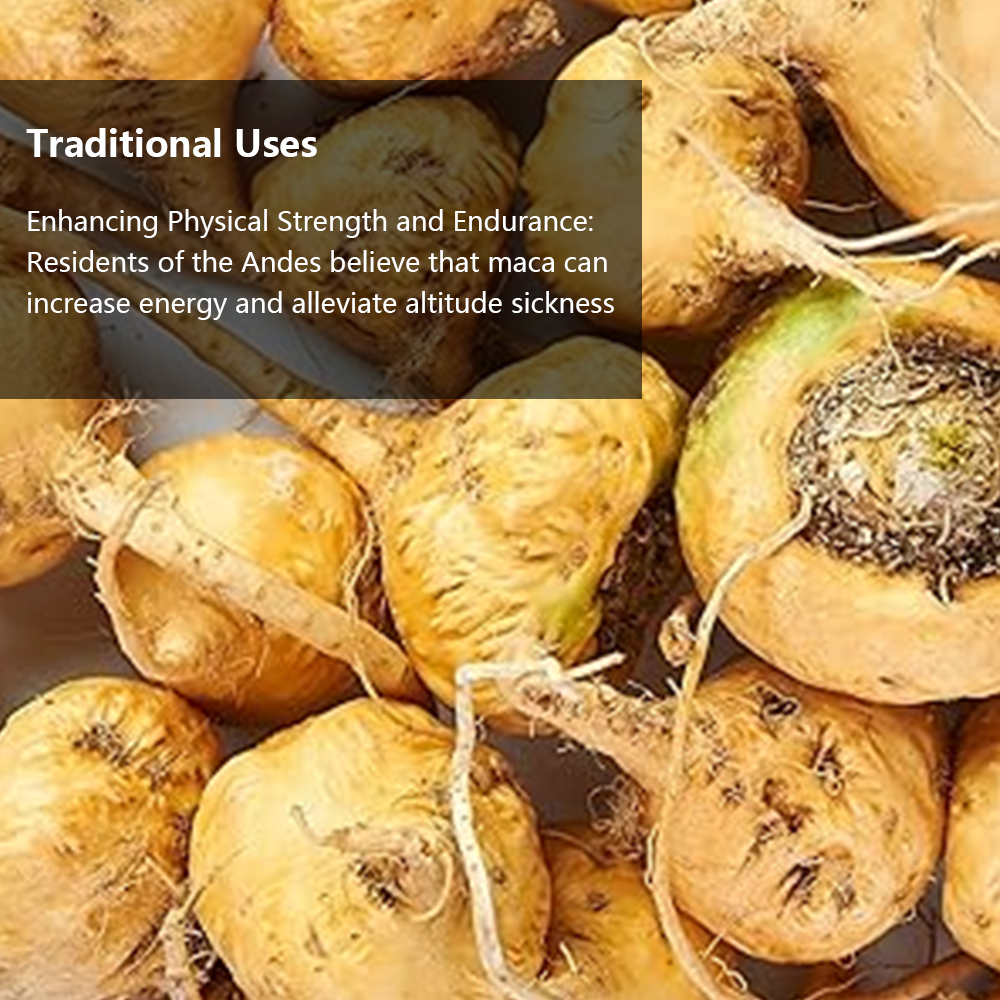
Maca (Lepidium meyenii) is a cruciferous plant native to the Andes Mountains in South America, traditionally used as food and medicine by residents in places like Peru. Its root tuber is rich in various nutrients, including proteins, amino acids, minerals (such as calcium, iron, and zinc), vitamins (B-complex and C), and bioactive compounds (such as macaamide and macaene). Below are the main functions, medicinal properties, and precautions regarding maca:

• Traditional and Modern Uses of Maca
Traditional Uses
Enhancing physical strength and endurance: Residents of the Andes believe that maca can increase energy and alleviate altitude sickness.
Improving fertility: It is used to regulate male and female reproductive functions, enhancing sperm quality and female fertility.
Regulating endocrine functions: In traditional medicine, it is used to relieve menopausal symptoms, menstrual irregularities, and decreased libido.
Modern Research-Supported Effects
Improvement of sexual function: Some studies suggest that maca may enhance libido and sexual function in both men and women by regulating hormones (such as testosterone and estrogen) or improving psychological states, but the evidence is still insufficient.
Anti-fatigue and exercise performance: It may delay exercise fatigue through antioxidant effects or energy metabolism regulation, but results can vary among individuals.
Relief of menopausal symptoms: Preliminary studies indicate that maca may reduce discomforts of menopause, such as hot flashes and mood swings, potentially related to its phytoestrogen-like effects.
Antioxidant and immune modulation: It contains polyphenolic compounds that may enhance immunity and reduce oxidative stress damage.
Modern Research-Supported Effects
Improvement of sexual function: Some studies suggest that maca may enhance libido and sexual function in both men and women by regulating hormones (such as testosterone and estrogen) or improving psychological states, but the evidence is still insufficient.
Anti-fatigue and exercise performance: It may delay exercise fatigue through antioxidant effects or energy metabolism regulation, but results can vary among individuals.
Relief of menopausal symptoms: Preliminary studies indicate that maca may reduce discomforts of menopause, such as hot flashes and mood swings, potentially related to its phytoestrogen-like effects.
Antioxidant and immune modulation: It contains polyphenolic compounds that may enhance immunity and reduce oxidative stress damage.
•Medicinal Properties of Maca in Traditional Chinese Medicine
Properties: Warm in nature, sweet and slightly pungent in flavor; associated with the kidney and spleen meridians.
Characteristics:
Kidney-tonifying and yang-supporting: Traditionally used for fatigue, reduced sexual function, and soreness in the lower back and knees caused by kidney yang deficiency.
Spleen-strengthening and qi-enhancing: Improves poor appetite and digestive issues, potentially related to metabolic regulation.
Regulating qi and blood: Used for fatigue and low immunity caused by qi and blood deficiency.

• Safety and Precautions
Maca is generally safe when used in moderation as a food, but long-term or excessive use may cause:
Mild gastrointestinal discomfort (such as bloating or diarrhea).
Hormone-sensitive individuals may experience headaches, insomnia, or changes in menstrual cycles.
Contains sulfur-containing glucosinolates (mustard oil glycosides), so those with thyroid disorders should use it cautiously.
Contraindications and Cautionary Groups
Pregnant and breastfeeding women: Lack sufficient safety data.
Patients with hormone-dependent cancers (such as breast or prostate cancer): May affect hormone levels.
Individuals with autoimmune diseases: May stimulate immune responses.
Children and adolescents: Avoid interfering with endocrine development.
Drug Interactions
Avoid concurrent use with hormone medications (such as contraceptives or thyroid hormones), as it may interfere with their efficacy.
Caution is advised when used with antidepressants (such as SSRIs), as it may exacerbate mood swings.
• Conclusion
As a natural health supplement, maca may have certain supportive effects on improving physical strength, sexual function, and menopausal symptoms, but scientific evidence remains limited, and effects can vary among individuals. Before use, it is recommended to:
Consult a doctor or traditional Chinese medicine practitioner, especially for those with chronic conditions or those taking medications.
Choose products from reputable sources to avoid low-quality maca mixed with chemical additives.
Combine with a healthy diet and lifestyle, avoiding over-reliance on a single supplement.

Note: Current research on maca is largely based on animal studies or small-scale clinical trials, and more high-quality studies are needed to verify its efficacy and mechanisms.
Advertisement time: Click to learn more about our maca products
Niacin vs. Nicotinamide: Scientific Distinctions and Clinical Applications of Vitamin B3 Forms
You Know What's NAD+ Potential Benefits?